Week 1 – PLN and Digital Identity
What Does it Mean to Network Using Social Media?
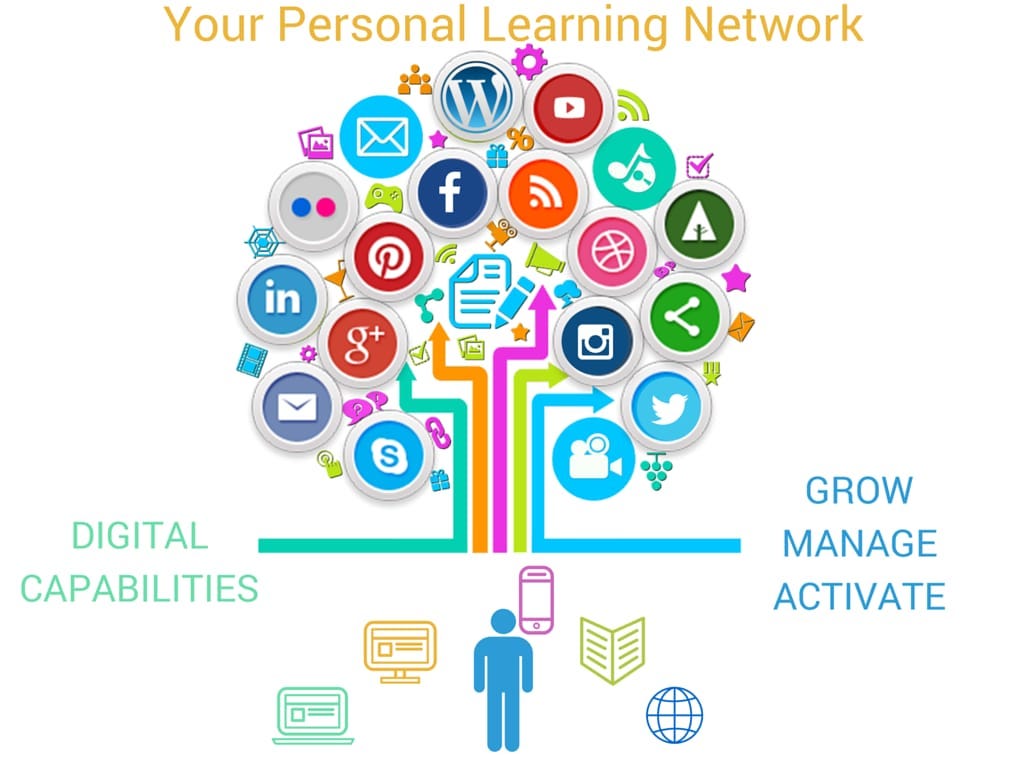
Kamakshi et al (2012) explains that networking through social media use means utilizing and engaging with online platforms, such as Facebook or LinkedIn, to create, build, maintain, and activate professional relationships that will benefit your own learning, or to share knowledge with others. Creating a strong online network does not necessarily mean you know more people, but it is how you are engaging with those you know and their strengths, and keeping an open mind to learning from anyone. By strengthening these relationships, you are opening opportunities for help in solving problems, sharing knowledge, receiving advice, and developing your career. Networks are usually created through similar interests or workplaces and from those with valuable experience. A Personal Learning Network is supported through activating those relationships and actually reaching out for learning opportunities, then maintaining those relationships to build your network.
How are We Motivated to Participate in Networked Publics?
In today’s world, participating in networked publics is almost crucial to having an instant connection with those we have relationships with, and they allow us to maintain those relationships from anywhere in the world. Online platforms make communication, sharing ideas, and creating connections much easier. Especially when it comes to professional networking, networked publics, such as LinkedIn, are valuable for giving us a wide range of people who offer advice, knowledge, and can help build new opportunities. Professional careers today are built on digital identities and online networks, and with the rapid pace of technological advancements, it could be detrimental to your career to not keep up (FutureLearn, 2022). These platforms not only help us build and strengthen new or old professional relationships, but allow us to easily communicate with anybody who may benefit our own learning. By making communication and collaboration accessible, networking publics have become a very important part of developing our careers and helping us become lifelong learners.
What are the Risks and Rewards of Public Communication?
Public communication is one of the main benefits to career networking and development. We can now instantly communicate to anyone with a digital identity and advance our learning from the knowledge we access, share, and receive. Not only do public learning networks expand our opportunity for learning and our careers, but implementing digital identities into society is beneficial economic participation and political inclusion, especially with how rapidly our world is digitizing (World Economic Forum, 2019). Those who do not have a digital identity or have barriers accessing social media platforms are being excluded from the evergrowing technological society most of the world is in. Countries, such as Estonia, that have created digital IDs can access e-banking, e-voting, and digitally signing legal documents, which is actually benefitting their economies. The countries that are behind on these technological advancements are missing out on these economic benefits and are falling behind the rest of the world in their digitized technological advancements. Public communication benefits societies on a broader scale while also helping people stay connected and learn to benefit from the information available online. However, when it comes to building and creating a professional learning network, social media carries its barriers to maintaining those relationships. Technology tells you who someone is based on their digital identities, but it does not, however, tell you how trustworthy someone is, if they are a creative partner that will help advance your knowledge, or whether they are someone to learn from and have a professional relationship with (Kamakshi et al., 2012). This is why it is important to also prioritize in person professional relationships to actually create a network that will benefit your own learning and sharing information to others.
What is a Digital Identity?
In reflection of Eric Stroller’s What is Digital Identity (2016) video, I have learned how your presence online, which includes what and who you choose to share, post, and interact with, makes up your own digital identity. It is also made up of the digital tools you use and how you utilize those online platforms to benefit your own, or others, learning. Everything you are doing online is a reflection of who you are, and the presence of digital identities is a tool for employers to get a sense of an individual before engaging professionally with them, which is why it is important to develop your digital identity. Strengthening your presence online is not only important for future career opportunities, but for staying up to date with technological advancements that are being implemented into our society. We want to strive to keep learning from the internet, and by reflecting ourselves in our digital identities, we can grow with social media.
How do Personal versus Professional Approaches to Digital Identity Affect Social Media Use?
The difference between a personal and professional digital identities affects how we approach social media and what we gain from it. A personal approach is often centred around interacting with personal interests online, using it for entertainment and for social interaction. Many people use social media as a leisure activity instead of a learning tool. This may be due to the fact, as Eric Stroller mentions, that as we get older, we strive less and less for opportunities to learn and for personal growth. In contrast, a professional approach to digital identity teaches us to utilize social media as a tool for lifelong learning and career opportunities. Instead of only relying on what we learn in school, we can now learn from the constellation of people we connect with through technology by building our personal learning networks. By approaching online platforms with a professional mindset, we become more open to expanding our professional relationships, learning from each other’s strengths and experience, and collaborating with those in similar fields of work. Online platforms allow us to access advice, knowledge and career opportunities, as well as making initial connections. However, successful professional networking is not just about simply making as many connections as possible, but learning how to choose who to learn from, knowing what connections are valuable, and actively maintaining those professional connections (Rajagopal et al., 2012). The more professional our digital identities are, the more relationships we are better able to maintain and strengthen. By developing our career networking, we can continuously learn, collaborate, and advance throughout our careers, which are turning more digital everyday.
How Do Digital Identities Converge in Networked Publics? What are the Impacts and/or Benefits?
Many people have multiple digital identities across different platforms. For example, an individual may use Instagram for their own personal interests, such as a fashion account to display their outfits, but then use LinkedIn and Facebook strictly professionally and not display personal information on there. However, everyone’s digital identities come together to create your own personal digital identity that reflects who you are and what you interact with online across all platforms. Future employers are very likely to view your professional social media accounts, but they may also look at your personal accounts to get a sense of who you are and how you interact with social media. This is why it is important to consider how you come across online even on personal accounts. Across these networked publics, digital identities are also interacting with each other on every social media platform, that was the point of creating social media in the first place. Online platforms bring together everyone that uses that platform, and lets anyone interact, communicate, share ideas, and build relationships. Through blogs, photo sharing apps, and professional platforms, we can constantly be influenced and learn from one another. The almost infinite amount of online platforms and people we can interact with online gives us access to find similar people and benefit from their skills, sometimes online communities are even made from reciprocity in information sharing and similar professional interests. As digital identities interact, individuals become connected and begin building their personal learning networks. Benefits of this convergence also include access to diverse perspectives and advice from around the world and different cultures. Without the world wide web, we would not have nearly as many immediate connections with every walk of life, and we would not be able to maintain those long distance connections. However, some general negative impacts from almost everyone having online access include things like false information and fake news being spread rapidly. Especially with the new developments in Artificial Intelligence, fake news and misinformation is becoming dangerous and detrimental to how we interact with media online. Due to how realistic photos and videos are from AI, we have to subconsciously question if all the media we see is real or not. Digital identities also give rise to online harassment and cyber bullying as a possibility, as well as privacy concerns for those who are not legal adults online. The strengthening of relationships online is a benefit to having digital identities, but I can also see this as a possible consequence if gone too far. I have noticed a recent wave in how anti-social people are becoming, and I theorize this is due to how accessible our phones are and how unimportant real life connection is becoming. I do not see technology replacing jobs and real life interaction as a positive, and I believe technological advancements, such as self check-outs and doordash, are making people too used to not having to go through any social interaction to purchase food. The same goes for online relationships; I definitely believe that finding a connection, friendship or romantic, online is beneficial and great for those who struggled in real life, and building online relationships should not be stigmatized or seen as less than. However, I believe only relying on connections that are fully online is not beneficial towards social skills or the development of your brain. Having real life connections and interactions with strangers is still a very important skill to have and to keep, especially in our almost fully digital world, remember to enjoy nature more than reels 🙂
References
Eric Stoller – What is Digital Identity? (n.d.). Www.Youtube.Com. Retrieved July 14, 2026, from https://www.youtube.com/watch?v=u0RryRbJza0
Kamakshi Rajagopal, Desirée Joosten–ten Brinke, Jan Van Bruggen, and Peter B. Sloep.
First Monday, Volume 17, Number 1 – 2 January 2012
https://firstmonday.org/ojs/index.php/fm/article/download/3559/3131
doi:10.5210/fm.v17i1.355
What is a Personal Learning Network (PLN)? (2022, October 25). FutureLearn. https://www.futurelearn.com/info/courses/learning-network%20age/0/steps/24644
World Economic Forum. (2019, February 5). Davos 2019 – Press Conference The Value of Digital Identity for the Global Economy and Society. YouTube. https://www.youtube.com/watch?v=1-V7lyxrOmw